Egypt - Red Sea · Riff
Malahi Sataya
The dive site
Malahi Sataya at a glance
Malahi translates to “playground.” So, the “playground near the Sataya Reef.”
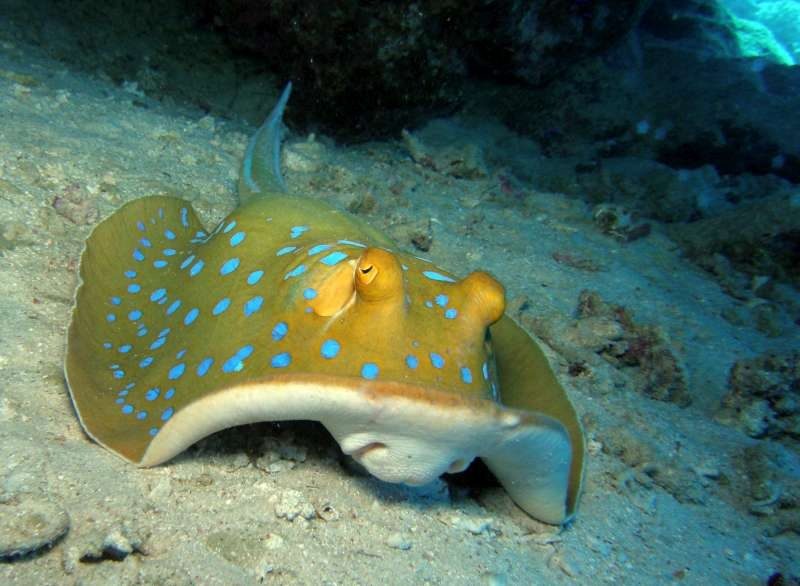
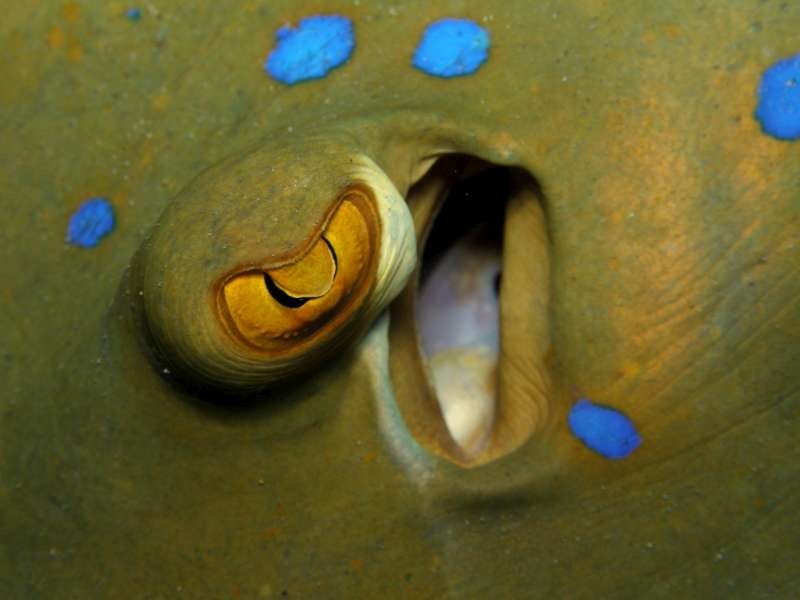
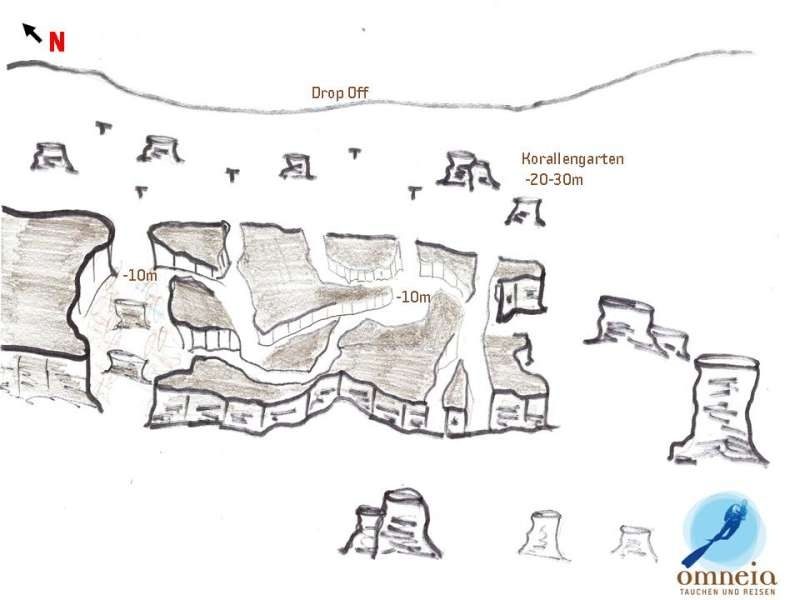
The sandy bottom around the reef starts at 18 meters and slopes gently down to 30 meters. It’s best to start the dive in the coral garden on the east side. It looks like a fairy-tale landscape, with many bizarrely shaped coral formations rising from the sandy bottom. Blue-spotted stingrays, butterflyfish, and porcupinefish hide among the table corals.
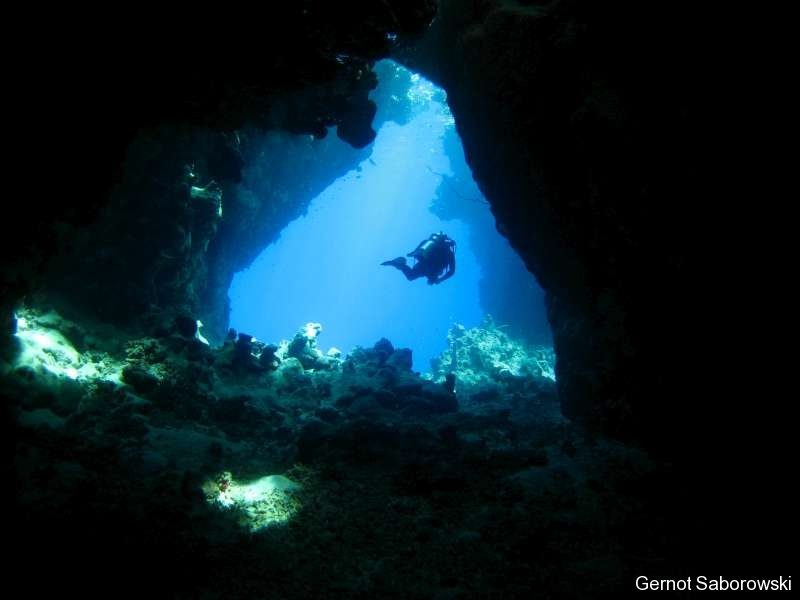
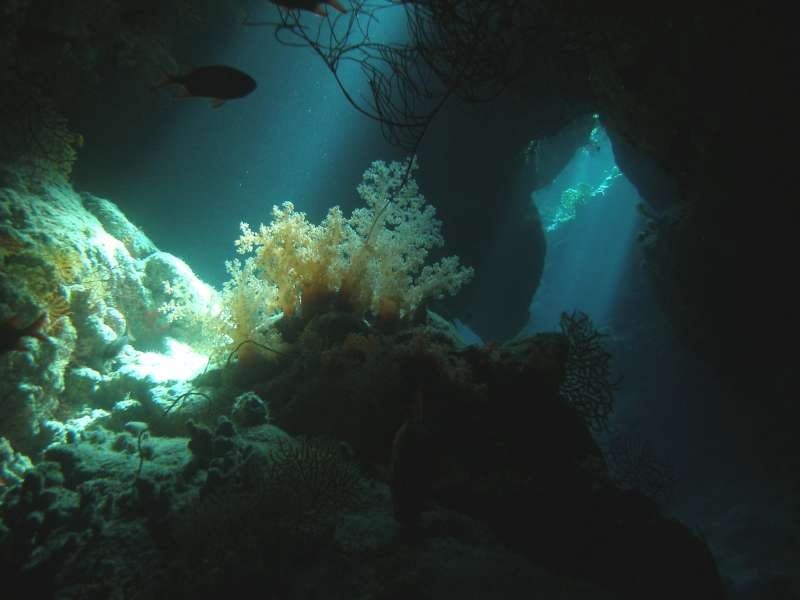
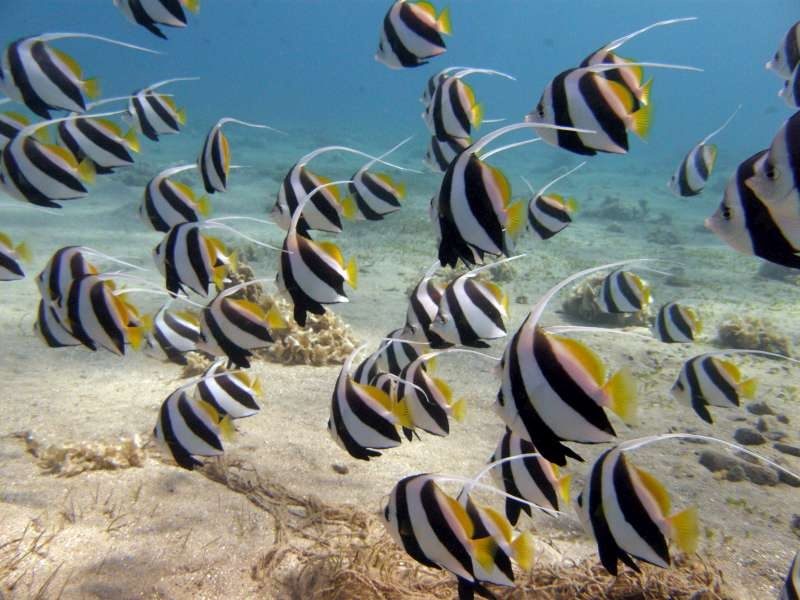
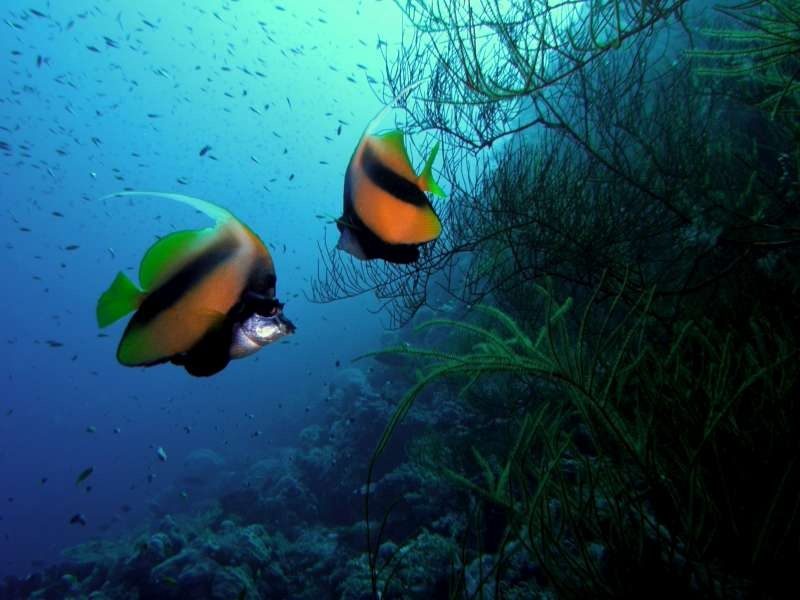
A school of bannerfish that has lived here for years guides divers to the entrance of the channel—which runs between 4 and 8 meters deep and cuts through the reef. Normally, “turn left at the bannerfish” isn’t a very good or reliable way to find your way underwater. However, this reef and its school of bannerfish are an exception: For years, the bannerfish have been lined up in neat rows just before the channel entrance in the coral garden, some of them beneath a large table coral. If you then enter the channel from the eastern coral garden and follow this reef on your left, you’ll reach the rugged, canyon-riddled interior of the reef through various entrances. Schools of cave wrasses and glassfish live under overhangs and in caves within the reef. The upper reef area is home to many scissortail sergeant fish and large schools of sea bream.
Two old Napoleon wrasse live beneath the boats’ anchorage. The Napoleon wrasse is the largest and heaviest of the wrasse species; it can weigh up to 150 kg. Thanks to its curious and outgoing nature, it is a favorite among many divers—but it’s not the smartest of all fish! If it were fed, it would eat until it died a miserable death. Please do not feed it—most Napoleon wrasse are so curious anyway that they’ll come very close on their own.
These safari routes call at Malahi Sataya:
Abu Fandera
Brother Islands - Daedalus - Sataya
Brother Islands - Daedalus - Sataya - Elphinstone
Daedalus - Rocky Island - Elphinstone
Daedalus - South
Daedalus - Zabargad - Rocky Island - Elphinstone
Daedalus - Zabargad - Rocky Island - St. Johns
Rocky Island - Zabargad - Abu Fandera
South to Dolphin House Sataya
St. Johns
St. Johns - Abu Fandera - Elba Reef
St. Johns - Rocky Island - Zabargad
St. Johns-Zabargad-Rocky Island-Elba Reef
Images